
Consent from people, not just website visitors.
Patients at reception, parents of a class, staff, drivers joining a fleet, guests at check-in. They will never see your cookie banner, and a signature on paper in a cabinet is hard to find and harder to withdraw. Consent Capture sends them a short form on WhatsApp, SMS or email, or hands it over at the desk, and keeps a record of exactly what each person agreed to.
Plain words, one clause at a time.
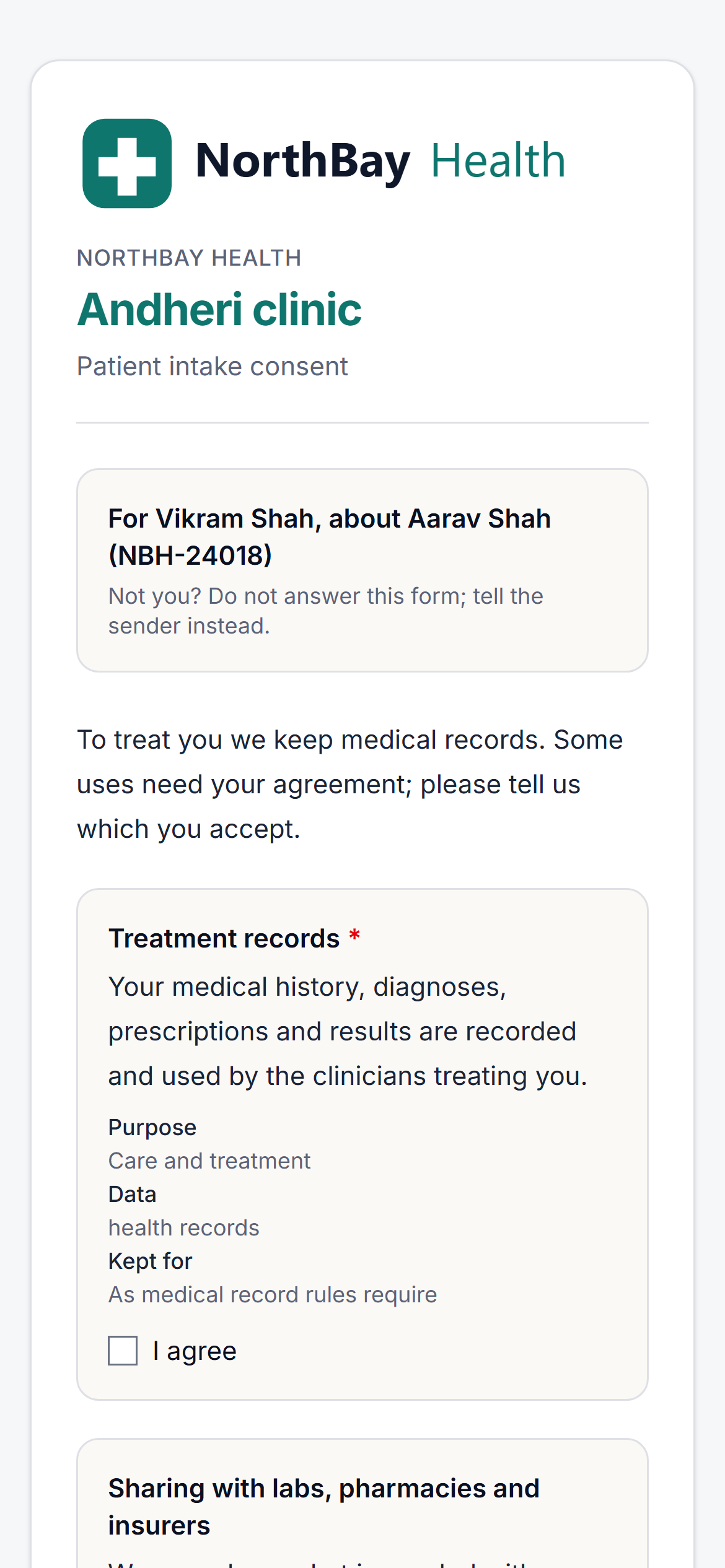
Each clause says what it is for, which data it covers, how long it is kept and who receives it. The ones you need are marked; the rest are a real choice. The form opens already addressed to the person and to whoever it is about, so a parent signing for a child, or a carer for a patient, sees both names.
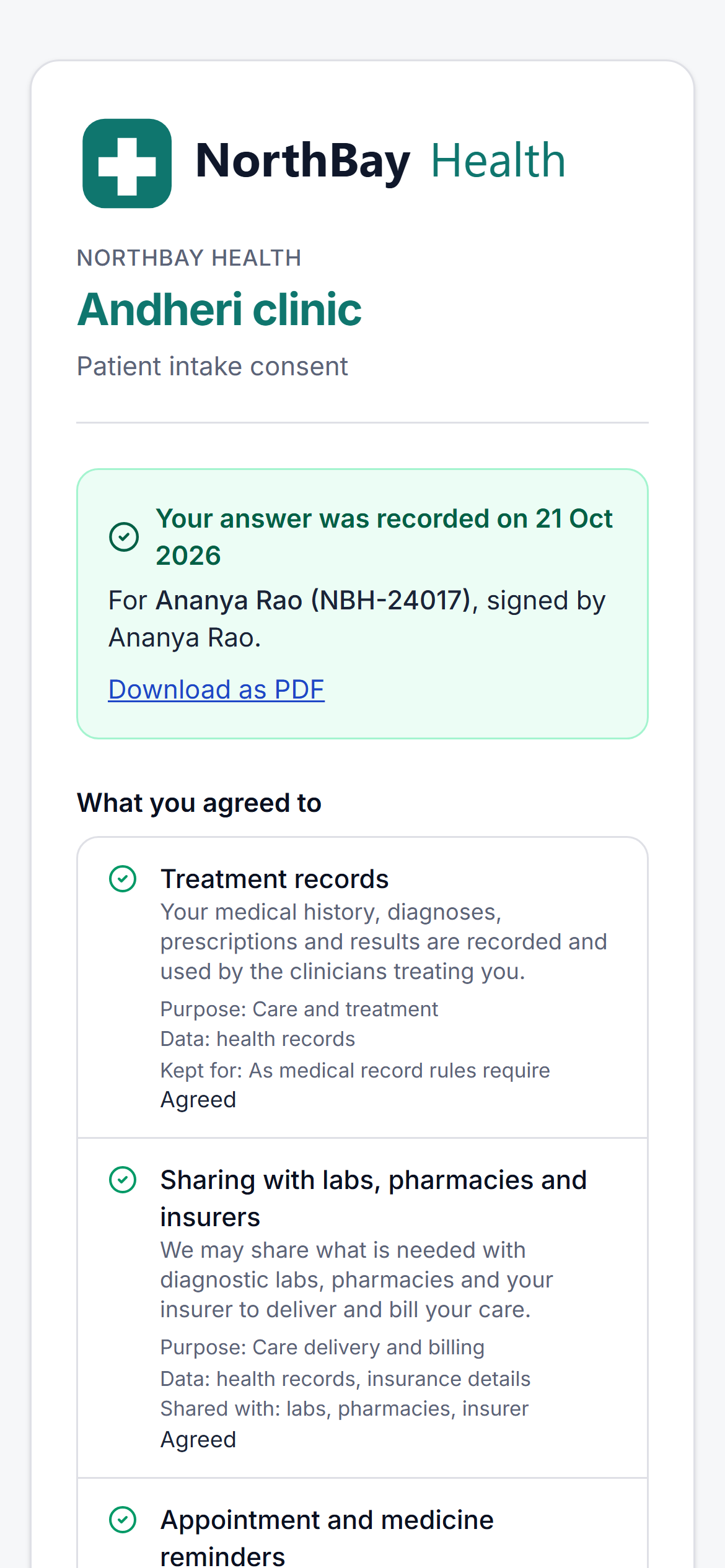
Afterwards they get a receipt of exactly what they agreed to, and can change their answer from it at any time. Withdrawing one clause leaves the others standing, and you are told straight away.
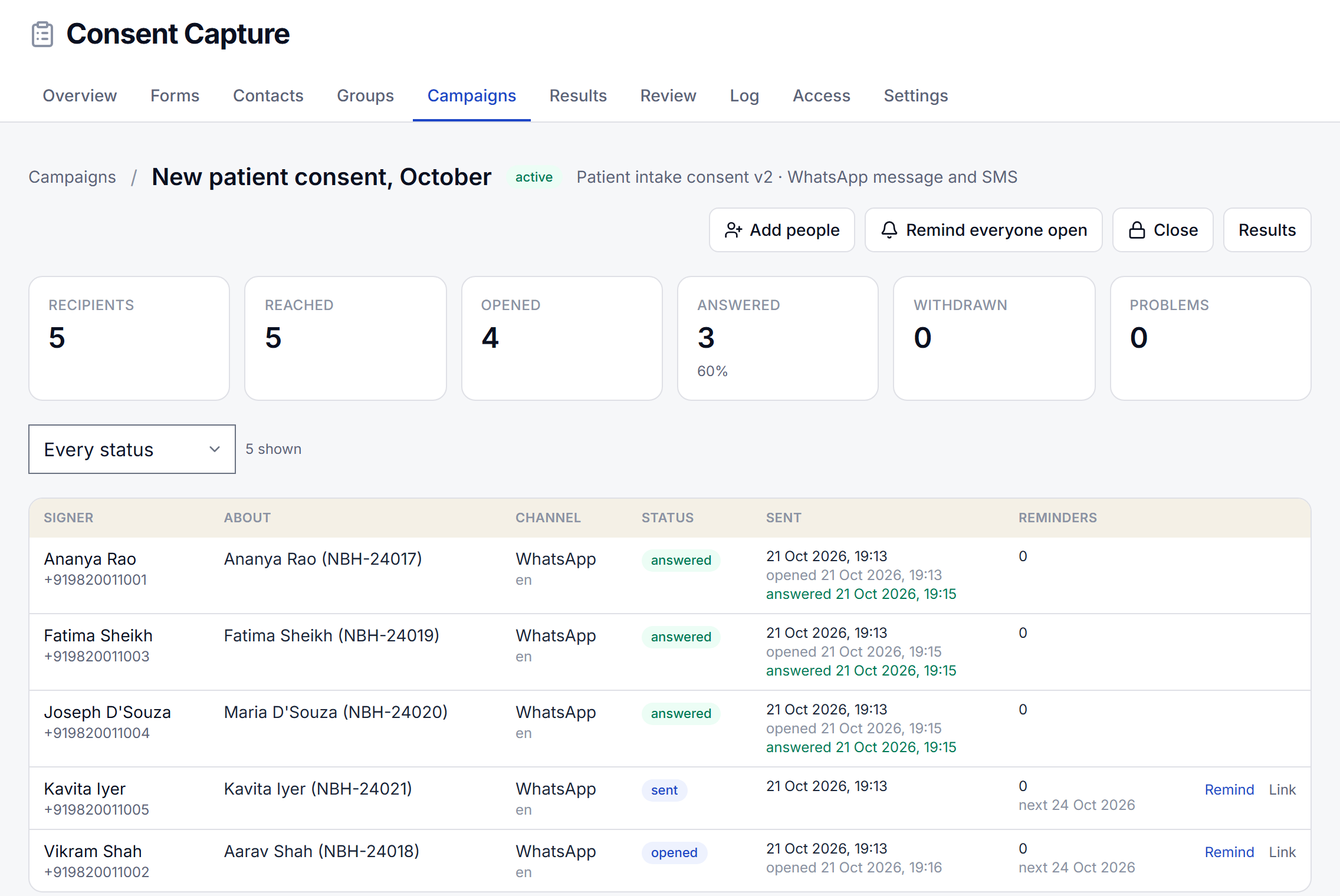
One campaign, and you can see who still has to answer.
Send a form to a group or to chosen people, by WhatsApp, SMS or email: on the first channel each person has, or on all of them. Reminders go to whoever has not answered, until the deadline. You see who was reached, who opened it and who answered, and anyone who could not be reached is listed with the reason.
Contacts and the people forms are about come in from a spreadsheet. Forms are translated into the languages your people read, and a person reviews each translation before it is used.
A card at reception works as well as a message.
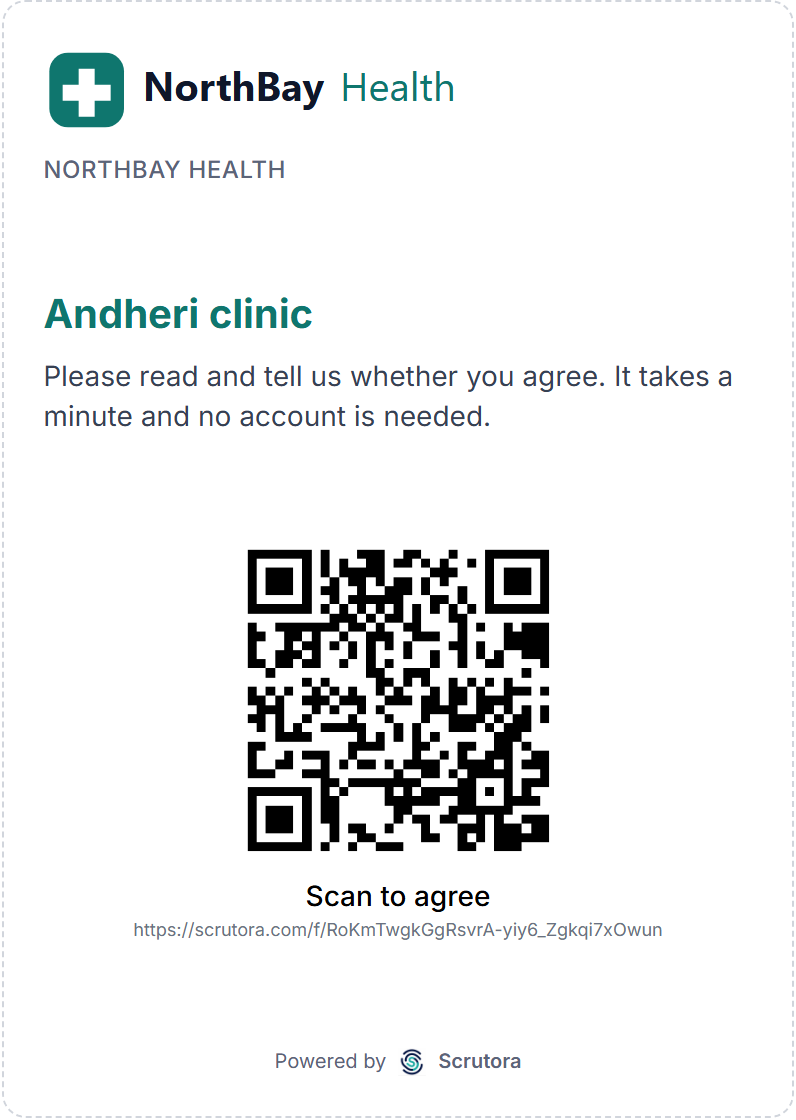
Print the form's QR code on a card, a poster or a table tent, and people answer on their own phone in a minute, with no account. A tablet at the front desk can run the form in kiosk mode, clearing itself after each person. When someone signs on paper, staff record the answer and attach the scan of the signed page, so the paper is part of the record.
Ready-made forms for patient intake, employees, drivers and hotel guests, and sections you build once and reuse.
Consent from the right person, especially for a child.
Before an answer counts, the signer confirms a code sent to the phone or email you hold for them.
For a parent or guardian, an adult check through DigiLocker, or an identity document reviewed by your staff. Verifiable consent for a child is what India's DPDP Act asks for.
When the person who signed does not match the person you invited, the answer waits for a decision instead of counting.
Every answer, clause by clause, and every change to it.
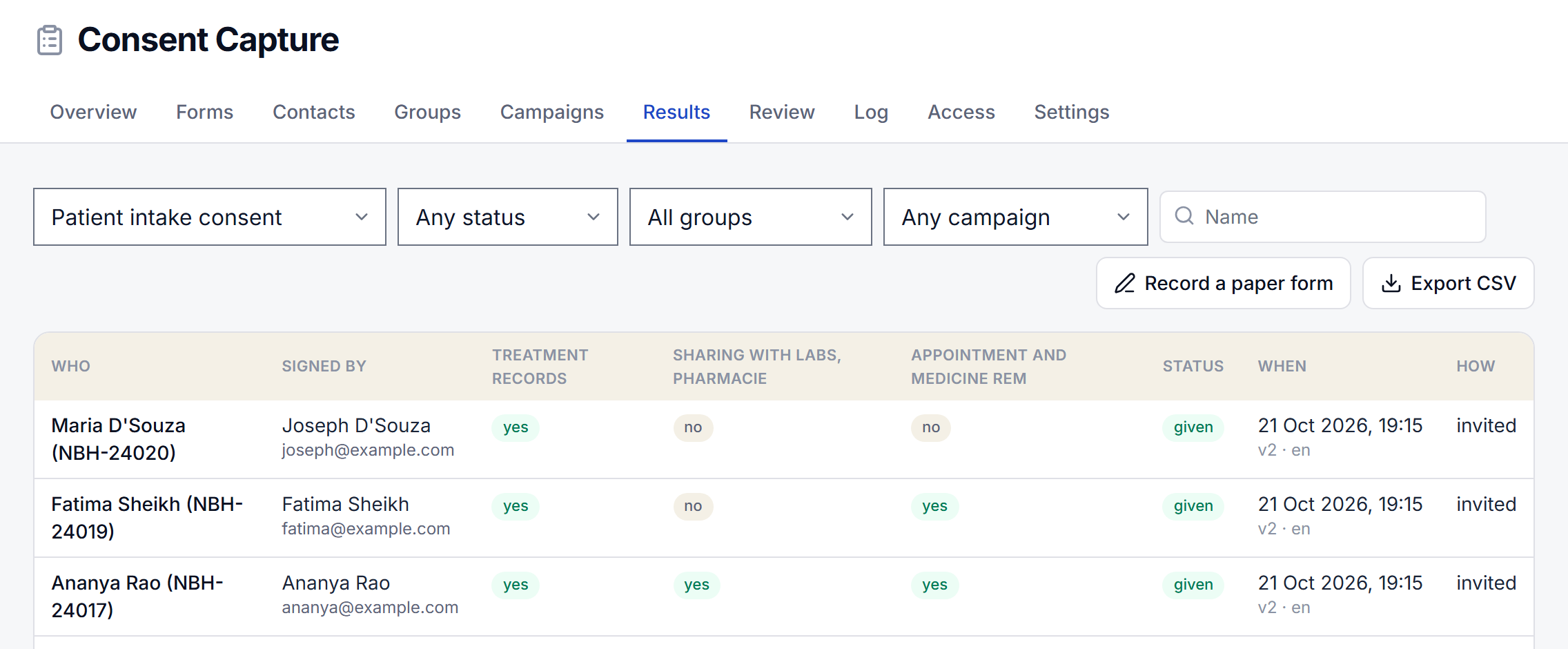
Results show each person's answer to each clause, who signed, when, on which version of the form, and how it arrived. Every answer and every withdrawal is added to a chained log you can download, so a record changed afterwards would show. Contact details and answers are encrypted at rest, and staff can be limited to the groups they look after.
Ask for consent inside your onboarding.
A platform that onboards drivers, patients or employees can ask for consent in its own flow: one call creates the invitation and returns the link to show or send, and a webhook reports the answer, a withdrawal or a review, with your own reference on every event.
POST /api/v1/forms/{form_id}/invitations
Authorization: Bearer <your API key>

{
  "contact": { "name": "Ravi Kumar", "phone": "+91 98200 11009" },
  "subject": { "name": "Ravi Kumar", "external_id": "DRV-2201", "relationship": "self" },
  "channel": "whatsapp",
  "reference": "onboarding-55812"
}

-> 201 { "id": "...", "status": "sent", "url": "https://...", "reference": "onboarding-55812" }

Webhook, when he answers:
form.submitted  { "reference": "onboarding-55812", "consents": { ... }, "receipt_url": "..." }