
Anyone can tick yes. The next question is show me.
A security questionnaire is answerable by anyone with an afternoon and some optimism. What stalls the deal is the follow-up, and the follow-up wants artefacts.
Two columns. Most teams can only fill the first.
The third column is generated. That is the whole difference: you are not writing a better answer, you are attaching the thing that makes the answer checkable.
Run their questionnaire against yourself first.
The worst outcome is not failing a question. It is asserting something, being asked for proof, and discovering in front of the customer that the assertion was wrong. Scanning first turns that into a fix you made quietly last week.
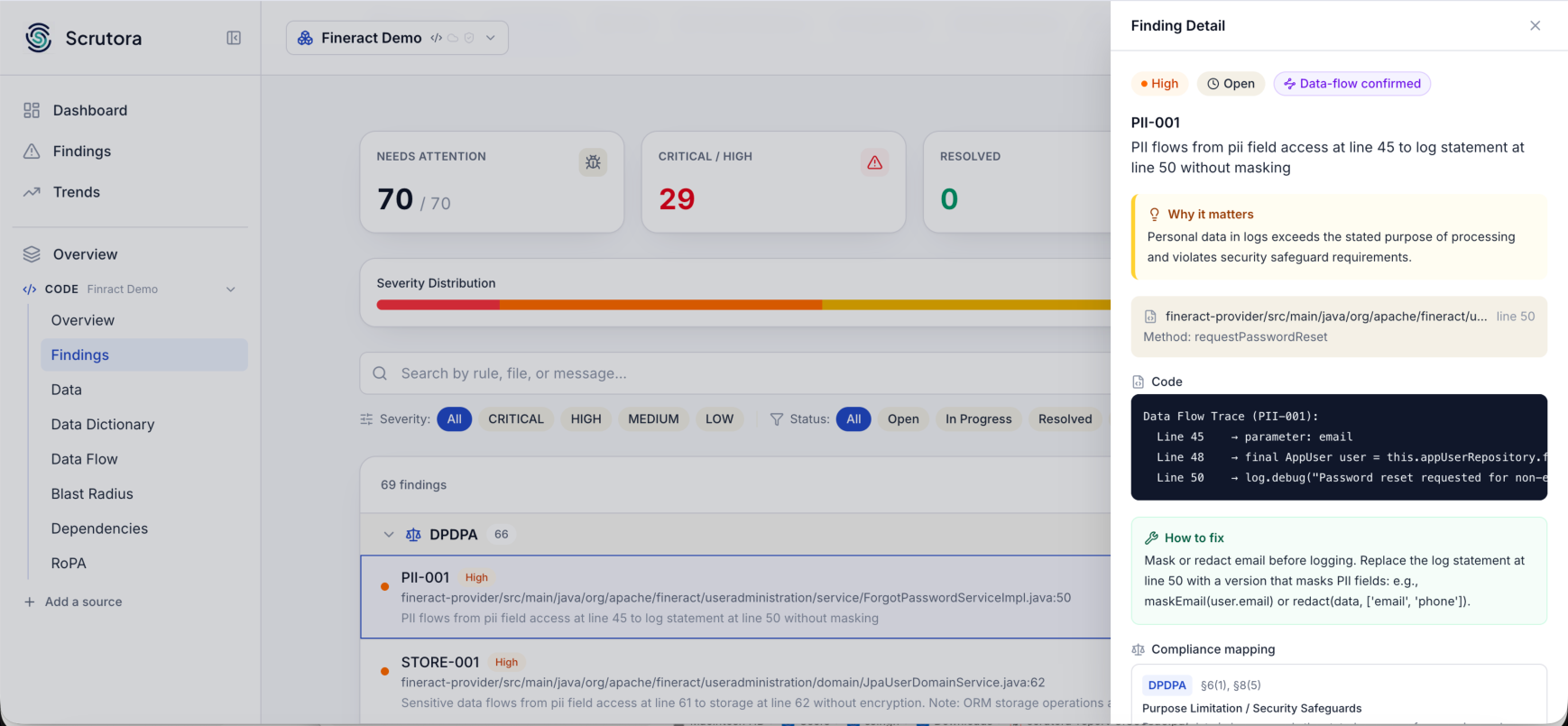
One export, not a folder of screenshots.
What personal data you hold, where it goes, and which third parties receive it. Answers most of the questionnaire on its own.
With severity, the clause each touches, and status. Reviewers care less about zero findings than about a queue somebody is working.
Components, advisories and which ones sit on a path to regulated data.