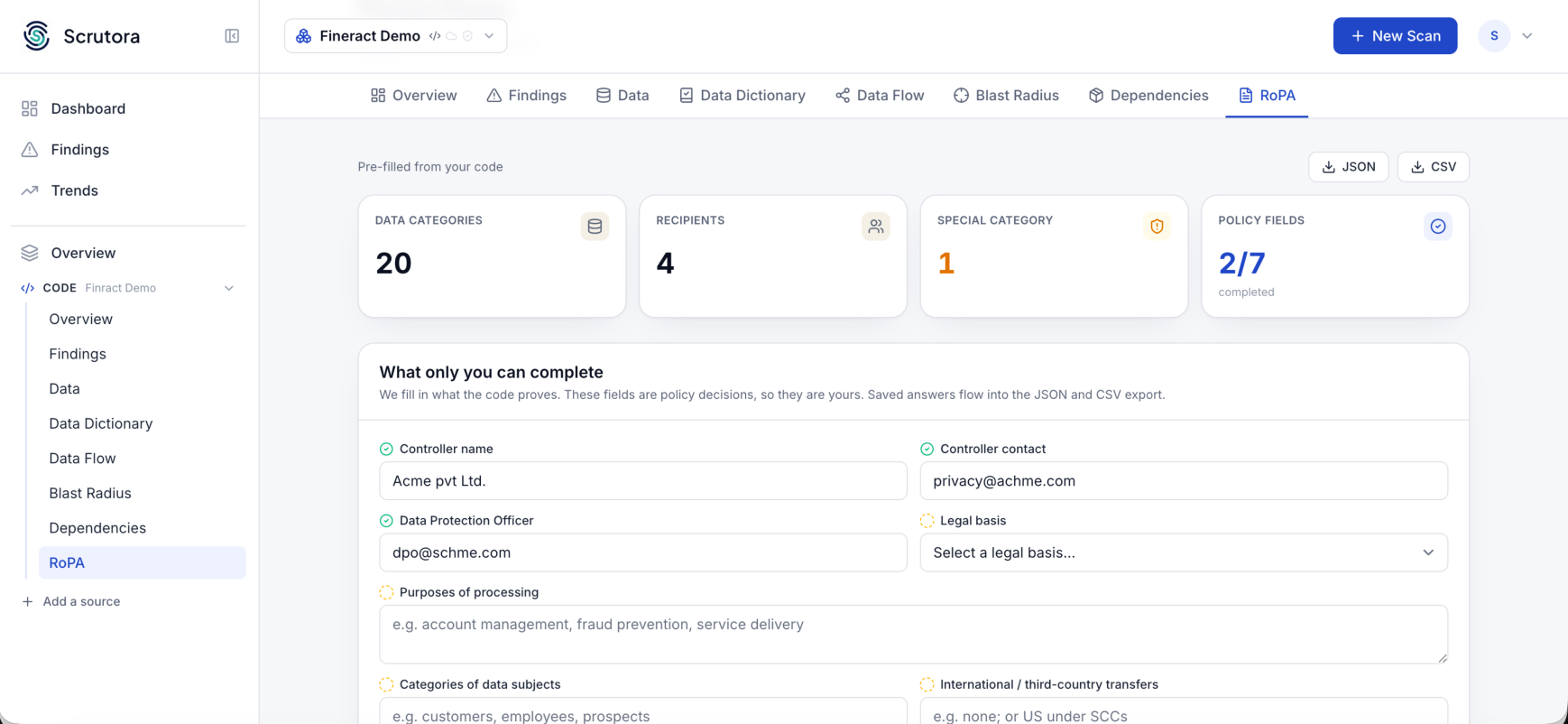
Know what the evidence says before the auditor asks.
Audit preparation goes wrong in one specific way: an answer is given in good faith, evidence is requested, and the evidence disagrees. Everything here is aimed at making that happen weeks early instead.
01 · What you will be asked
Six questions, and where the answers come from.
02 · The order to do it in
Map, then triage, then assemble.
FIRST, THE MAP
Scan and classify. Until you know which fields count as personal data and where they go, every other answer is a guess with a confident tone.
THEN THE QUEUE
Sort findings by the obligation they touch. Auditors are far less troubled by an open finding with an owner than by one nobody had noticed.
LAST, THE PACK
Export the evidence once the picture is stable. Assembling it first just means assembling it twice.
03 · What you hand over
One record, generated, with a date on it.