
The answer is assembled before anybody asks.
An evidence pack is one asset, as of one date: what personal data it holds, where that data rests, what consent was captured, and every finding with the clause behind it.
The latest RoPA for the asset, pre-filled from code with your policy answers merged in.
The data stores backing it, and which of them currently have issues.
The consent state for the same asset, from the hash-chained record.
Reconciled to one asset, as of one date.
Code, cloud and consent normally live in three tools with three vocabularies and three refresh cycles, which is why assembling evidence is a fortnight of screenshots. Here they are one graph, so the pack can say that this field, in this store, under this consent, is the same thing.
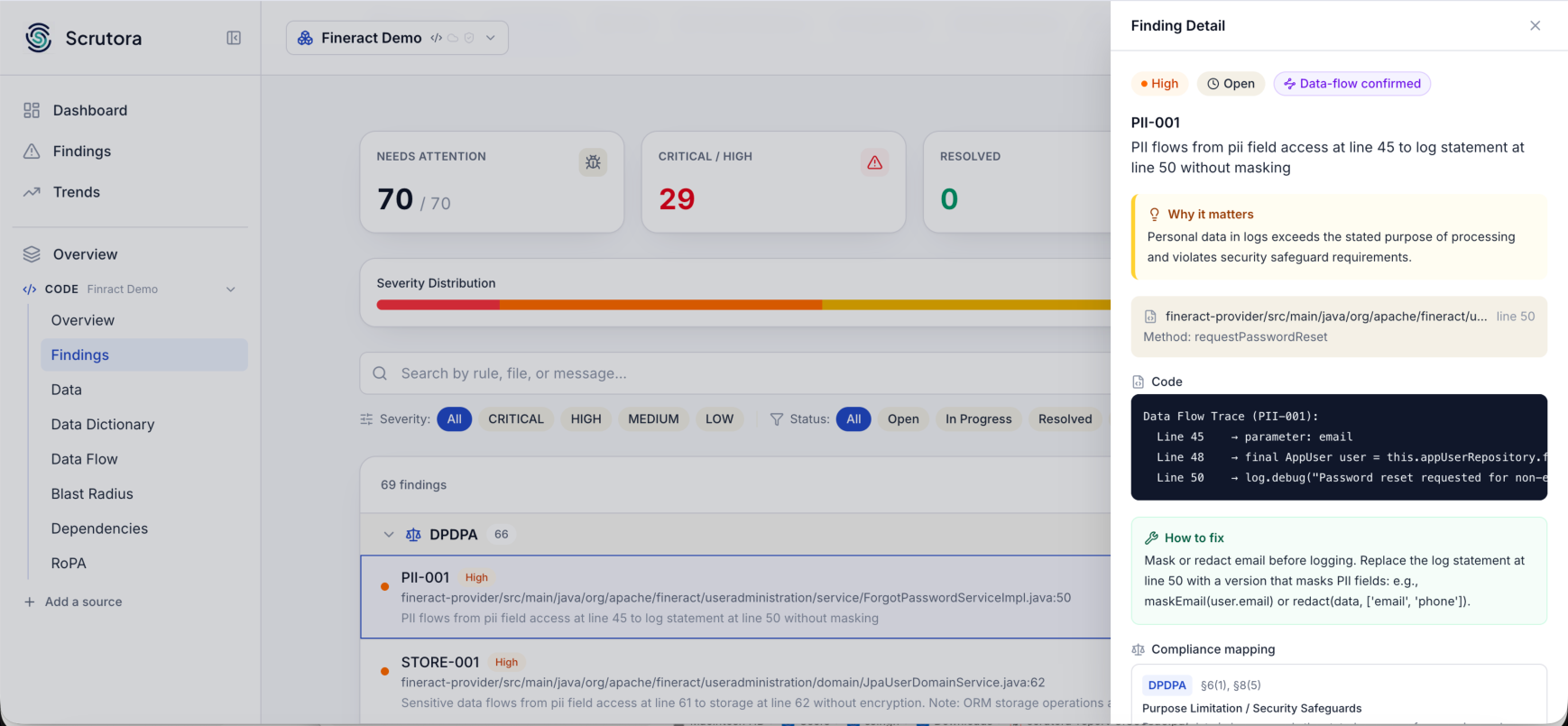
Every finding carries its clause.
Evidence, not certification.
This is the output of automated analysis of your code, your cloud configuration and your consent records. It is a strong input to an audit and a fast answer to a customer. It is not an attestation, we do not grade you, and nobody here has been in the room with your auditor. Any tool that offers you a score for this is selling you something it cannot deliver.